

Why the Top Phoenix Dental Practices Trust Coeus Consulting?
Protect patient data with the pros. Phoenix dental practices trust Coeus Consulting for expert HIPAA compliance, managed IT, cybersecurity, and risk mitigation.
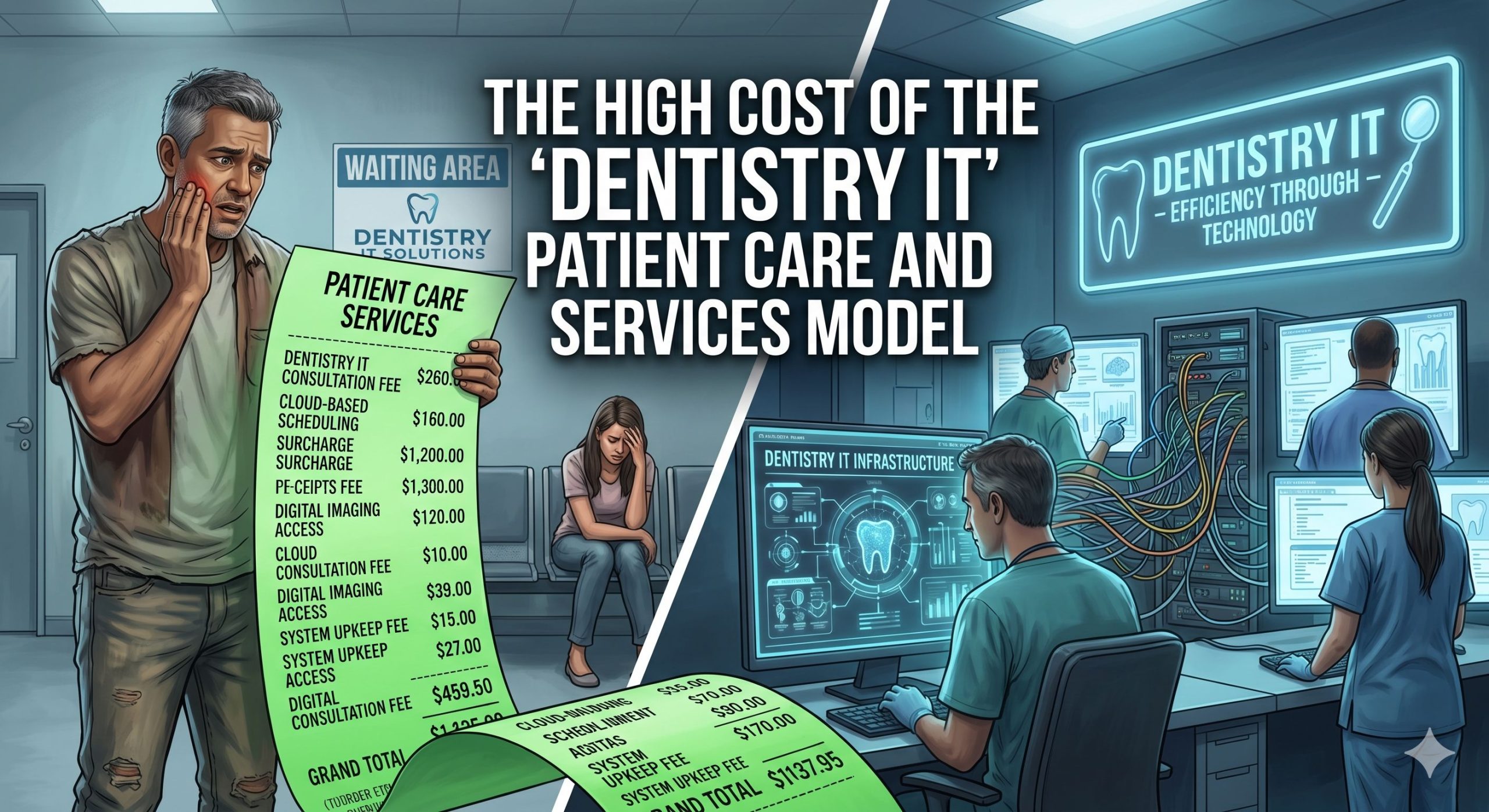
The High Cost of the “Dentistry IT” Patient Care and Services Model
As a dental office manager or practicing dentist, you are trained to spot decay before it becomes a crisis. You know that a small cavity, left untreated, eventually leads to an extraction. Surprisingly, dental professionals treat their technology infrastructure and cloud solutions the same way—patching holes with “DIY” solutions.
If the dental practice form printer stops or the network lags, the “IT person or remote support resources” becomes the office manager. While this might save a few dollars on the monthly balance sheet, the hidden costs are staggering:
- Clinical Distractions: Every minute a dental technician spends troubleshooting data practice management software is a minute stolen from patient care.
- Knowledge Silos: If your IT continuity relies on a single employee’s personal knowledge, your dental care practice is one resignation away from a total blackout.
- The Scalability Wall: Moving from a single location to a multi-office dental clinic requires a sophisticated roadmap that DIY setups cannot support.
Just as you identify a small cavity to prevent a looming extraction, the top dental firms in Phoenix understand that “DIY” technology is a ticking clock for their practice. Relying on makeshift patches for cloud solutions and local infrastructure creates digital decay that eventually halts patient flow.
Coeus Consulting provides the specialized preventive care your practice deserves, offering proactive managed IT services tailored to the high-stakes environment of Arizona’s leading clinics. By transitioning from reactive “patchwork” to the sophisticated oversight of a true IT partner, you ensure your practice’s health is as resilient as the smiles you create.
Taking Dental Practice Management to a New Level with Managed IT
Elevating dental practice management from a reactive state to a proactive strategic model requires a fundamental shift in how technology and cybersecurity are handled. In a traditional “DIY” dental software management environment, dental practitioners and their office managers often find themselves distracted from their clinical care functions.
By transitioning to a managed IT model, dental practices reduce operational outages and improve the overall customer experience.
Dental Solutions Software Providers’ Importance Regarding Practice Growth
Taking management to a new level also means addressing the “scalability wall” that many growing offices face. Moving from a single-location brand to a multi-office brand requires an IT roadmap that is easy to use. Managed IT provides the necessary continuity and depth to support the practice’s growth, ensuring that standardized systems for insurance processing and patient records remain secure.
Managed IT Support: Becoming a Dental Office Asset, not a Liability
Finally, professionalized management transforms IT from a high-risk cost center into a resilient business asset. Without expert oversight, compliance support, data security, and 24 x7 helpdesk solutions, practices often operate with single points of failure.
These failures include a lone server with unverified backups or unmanaged cloud environments, which can cause chaos during high-bandwidth X-ray imaging.
A managed IT support service for dental practice management solutions mitigates these existential threats by implementing rigorous HIPAA compliance policies. Managed IT services promote a strong reliability needed to make informed technology investments that drive long-term business efficiency.
Dental Office Cybersecurity: Compliance: Customer data: Ransomware
In modern dentistry, cybersecurity is no longer just a technical utility, it is a critical pillar of operational, financial, and reputational stability. As practices become more digitally integrated, the intersection of legal compliance and data protection defines the long-term value of the practice.
The HIPAA Compliance Mandate
Dental practices are strictly bound by the HIPAA Security Rule, which requires providers to ensure the confidentiality, integrity, and availability of electronic Protected Health Information (ePHI). Compliance is a legal obligation that involves:
- Risk Analysis: Identifying vulnerabilities like outdated software or weak passwords that could lead to unauthorized data access.
- Access Controls: Utilizing multi-factor authentication (MFA) and the principle of least privilege to ensure staff only access the data necessary for their roles.
- Data Encryption: Scrambling patient records both at rest on servers and in transit during insurance processing to mitigate the impact of a breach.
Protecting Customer and Patient Data, Leveraging Security Solutions and Technology
Dental offices are high-value targets because they store sensitive customer data, including billing information, Social Security numbers, and clinical notes. Protecting this data requires a multi-layered defense:
- Network Security: Implementing business-class firewalls and segmented Wi-Fi to isolate patient management systems from guest networks.
- Endpoint Protection: Deploying advanced antivirus software on every workstation and imaging PC to detect threats early.
- Staff Training: Educating the team—often the most vulnerable link—on recognizing phishing attempts and social engineering tactics.
In today’s dental landscape, protecting patient data is not just a regulatory hurdle; it is the cornerstone of the trust your practice is built upon. Leveraging enterprise-grade security solutions—from advanced endpoint protection to business-class firewalls—transforms your technology from a vulnerability into a strategic asset.
By automating HIPAA-compliant encryption and resilient cloud backups, you safeguard your practice against the devastating impact of ransomware and data loss.
Mitigating the Ransomware Threat in Dental Practices
Ransomware is malicious software designed to deny access to data by encrypting files until a ransom is paid. Because HIPAA requires providers to maintain access to health records, a ransomware attack is often considered a reportable breach.
- Resilient Backups: Maintaining automated, encrypted backups both locally and off-site (cloud) ensures data can be restored without paying a ransom.
- Incident Response: Having a written response plan allows a practice to react quickly, isolating affected systems to prevent the attack from cascading through the network.
- Patch Management: Regularly updating software and operating systems to close security gaps that hackers exploit to deliver ransomware.
Ransomware is no longer a distant threat; it is a direct challenge to the operational existence of modern dental practice. Because an attack can freeze patient bookings and encrypt clinical records, mitigating this risk requires more than just luck—it requires a resilient, multi-layered strategy. By implementing automated, encrypted backups and rigorous patch management, you ensure that your practice can restore data swiftly without ever succumbing to a ransom demand
Managing the Four Existential Risks to Your Practice
Within the dental industry, secure clinical workflows require vendor coordination, reliable technical support, and funding.
For IT personnel supporting dentist offices, the goal is to mitigate “practice-killers” that the average user might not see coming:
1. The Single Point of Failure
Running an entire practice on one server is common, but it is high-stakes gambling. Without professional redundancy and cloud-leveraged disaster recovery, a single hardware crash can erase years of patient data.
2. Cloud Chaos in Insurance Processing
While moving to the cloud is ideal, an unmanaged migration often leads to “cloud chaos”. Large-file X-ray scans and imaging often struggle with bandwidth in poorly configured cloud environments, leading to bottlenecks in insurance processing and treatment planning.
3. The $140 Million HIPAA Threat
Compliance is not a suggestion; it is a legal mandate. As of early 2024, HIPAA-related penalties and settlements totaled more than $140 million. Inadvertently exposing patient records through weak DIY security is an “existential threat” to your reputation and your checkbook.
4. Deadly Downtime
If you cannot access your bookings or digital records, your practice stops. A qualified Managed Service Provider (MSP) ensures that outages are resolved with minimal to no disruption to patients.
Strategic Growth Through Comprehensive Managed IT
n a growing dental practice, stagnant technology is a liability. Relying on a “break-fix” mentality halts momentum and breeds operational fear. True growth requires a managed IT partner who delivers a holistic vision rather than just reactive repairs.
By shifting to a managed model, you stop viewing upgrades as expenses and start leveraging them as competitive differentiators. This partnership removes the weight of cybersecurity threats, complex hardware maintenance, and constant software patches from your shoulders.
When you offload the technical burden to experts, you reclaim your clinical focus. Managed IT ensures your infrastructure scales seamlessly with your patient volume, transforming technology from a source of anxiety into the engine of your success. Empower your team to prioritize dentistry over downtime.
Why DIY IT is the “Hidden Decay” of Your Dental Practice?
In the modern landscape of dental office management, technology is no longer just a backend tool; it is the backbone of insurance processing, appointments, patient experience, and clinical efficiency.
Coeus Consulting: Managed IT For Phoenix Dental Offices
Coeus Consulting doesn’t just provide support; we provide the Codex framework—a precision-engineered methodology designed specifically to harden dental IT infrastructures, protect value insurance workflows, and guarantee 24/7 clinical continuity. With Coeus and the Codex framework, your managed IT becomes more than a utility; it becomes a powerful, unshakeable engine for your practice’s growth and security.
About the Author
John Gormally, MBA
Digital Marketing Coordinator, Coeus Consulting
John Gormally is a 28-year cybersecurity professional with enterprise experience from Cisco Systems, Citrix, F5 Networks, BlackBerry, IBM, LogRhythm, and Proofpoint. A 6-year U.S. Marine Corps veteran and former Military Communications Specialist, he holds an MBA in Marketing and co-authored the graduate cybersecurity curriculum at Cal State San Marcos. He has presented at ISSA, ISACA, and FBI InfraGard events, and writes on cybersecurity, compliance, and managed IT.