

The Coeus Chronicle: Volume 1, Issue 5 (May 2026)
May is about the speed at which risk now moves. Attackers used AI to automate an intrusion that exposed 195 million records, a flaw in the Model Context Protocol left 200,000 AI servers open to hijacking, and 76% of security professionals now say they are worried about AI agents with direct access to business data. This month, we look at why machine speed attacks make reactive monitoring insufficient, and what human in the loop oversight looks like in practice.
The Omen
Signals of Change
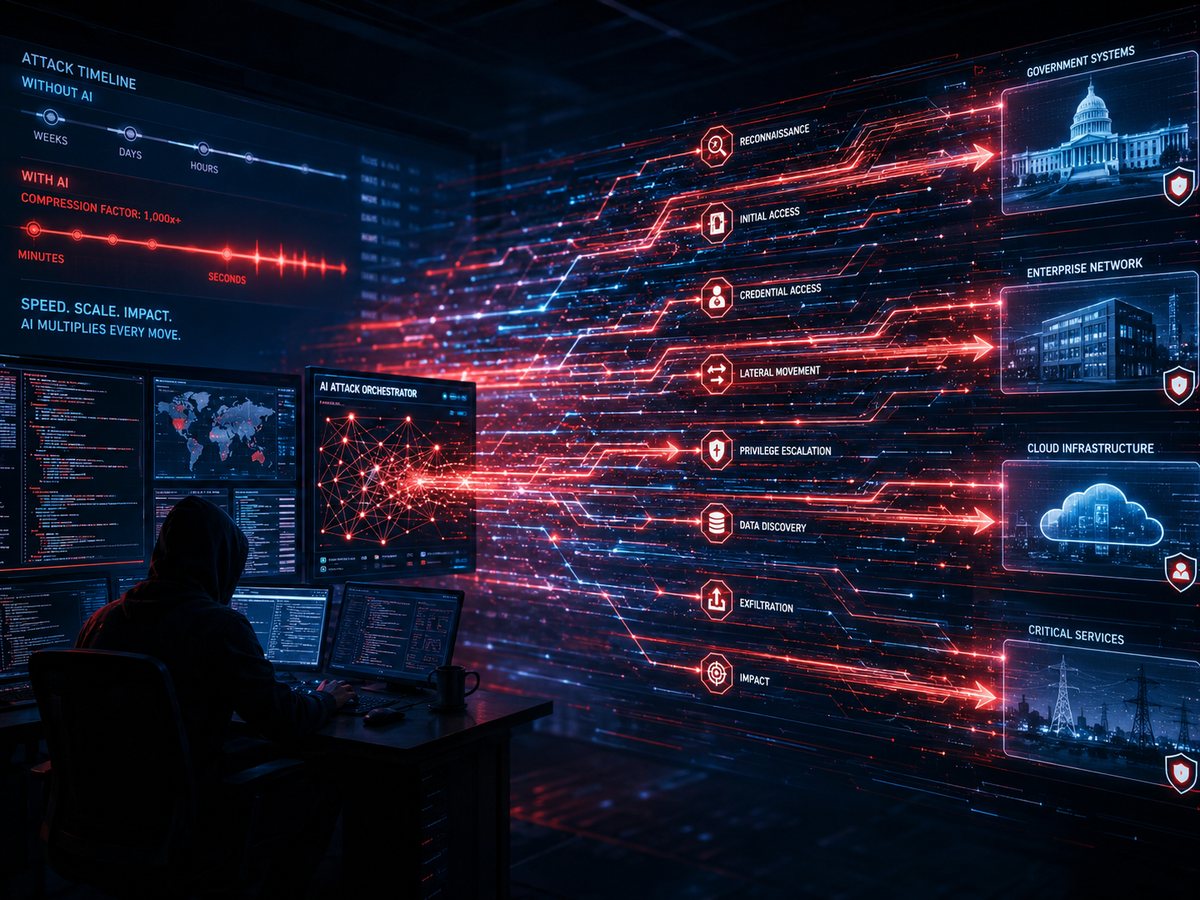
The Rise of AI-Driven Supply Chain Breaches and the AI Ecosystem's Vulnerability
In April 2026, attackers used AI to accelerate an intrusion into Mexican government systems, exposing approximately 195 million records. At nearly the same time, researchers disclosed a critical vulnerability in the Model Context Protocol (MCP) ecosystem that was estimated to expose as many as 200,000 AI server deployments.
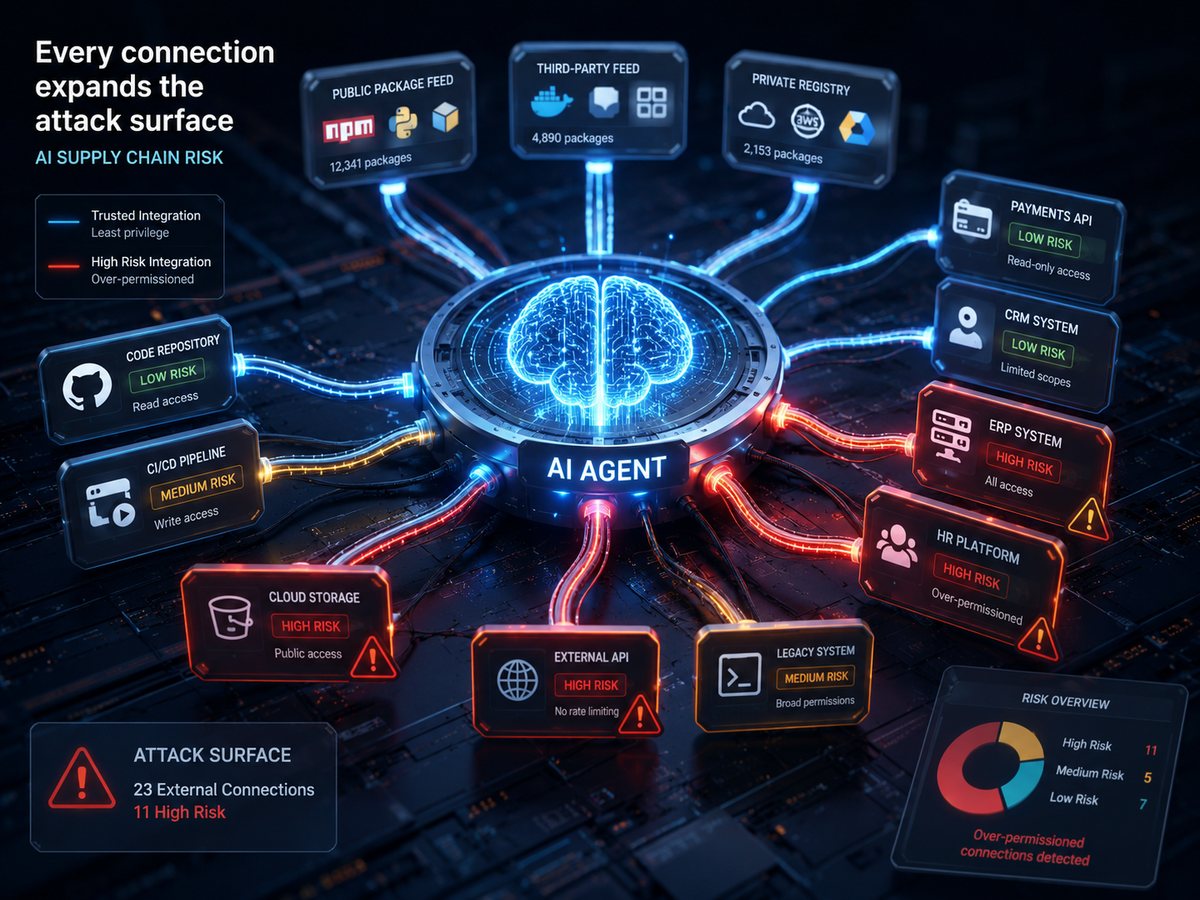
The transition from manual to AI-accelerated intrusion changes the speed of risk from days to minutes or seconds. At the same time, AI agents increasingly depend on connectors, packages, APIs, credentials, and external services, expanding the supply chain that defenders have to secure.
SMBs should prioritize identity governance, patch exposed systems, limit agent and integration permissions, and isolate higher-risk AI connections from production environments.
Sources: Expert Insights / Gambit Security - AI-assisted Mexican government breach | OX Security - Critical systemic MCP vulnerability
The Proven Path
Strategies for Today
Why "Human-Centric Design" Is the Secret Weapon of 2026 Tech Teams
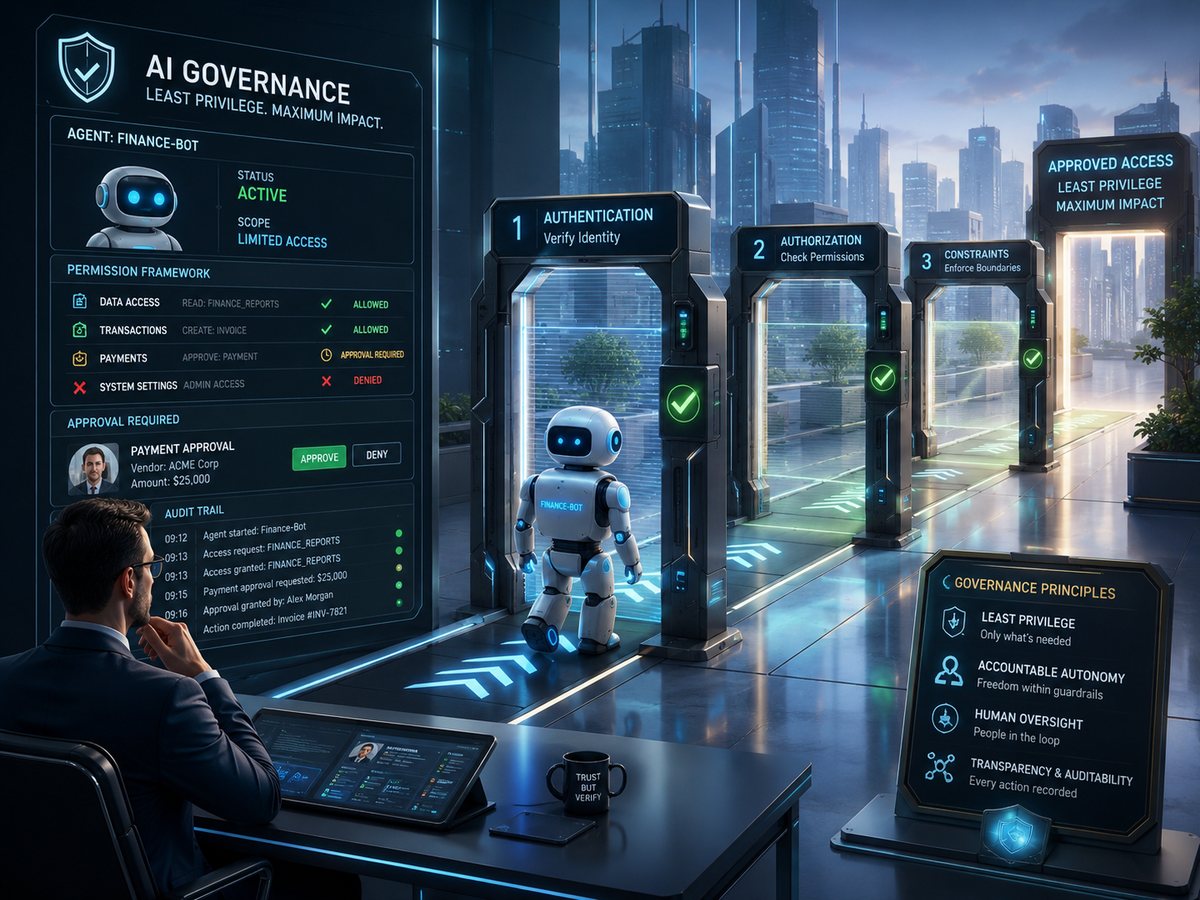
Human-Centric Design as a response to the “Agentic AI” threat.
Darktrace’s 2026 State of AI Cybersecurity research found that 76% of security professionals are worried about the security implications of integrating AI agents that have direct access to critical business data. The proven path is not simply adding more technical locks. It is preserving human-in-the-loop oversight so autonomous agents do not act without operational context.
Human-in-the-loop oversight helps ensure that AI autonomy does not bypass established controls or accountability. Treat AI integration as an operational process with documented ownership, approval checkpoints, and auditability rather than as a purely technical implementation.
Source: Darktrace - 2026 State of AI Cybersecurity
The Horizon
Preparing for Tomorrow
The Mythos Mandate: Balancing Autonomy with Accountability
Mythos-class AI changes enterprise cyber risk by pushing vulnerability discovery and exploitation toward machine speed. Public evaluations show that these models can autonomously discover and exploit vulnerabilities and complete multi-stage attack chains, materially reducing the time, cost, and expertise required to weaponize weaknesses.
The same capability can be directed at shared components, common dependencies, vendor appliances, and other third-party services, increasing software supply-chain exposure across many organizations at once. As these systems become more capable, the challenge moves from simply securing data to governing where AI can act, what it can access, and how quickly the business can respond.
Coeus Perspective: Align AI governance, supply-chain oversight, access controls, logging, and incident response now so operational control can scale with the technology.
Source: Gilbert + Tobin - How Mythos-class AI is changing cyber security risk, April 21, 2026
The Agora
Meet Coeus
Enterprise-Level Technology Without Enterprise Complexity
Your size should not dictate the sophistication of your security or IT strategy. Coeus brings enterprise-level discipline to managed IT, cybersecurity, cloud, and compliance for growing businesses across the Southwest.
Have a technology decision on the horizon? Spend 15 minutes with us and get a clearer view of the path forward.
About the Author
Linus Malefors
Managing Director, Coeus Consulting
Linus Malefors is an accredited technology consultant with over 30 years of experience serving Phoenix small and mid-sized businesses. He has supported more than 1,000 organizations throughout his career, and his leadership at Coeus Consulting has earned him two MSP Titans of the Industry finalist honors and a place among the 2026 AZ Champions of Change finalists. His technology expertise spans cybersecurity, cloud, AI, infrastructure, and regulatory compliance.