

The Coeus Chronicle: Volume 1, Issue 2 (February 2026)
February is reinforcing a familiar lesson: technology risk is rarely about one tool or one threat. Microsoft patched vulnerabilities already being used to bypass security protections, research continues to show that stronger businesses integrate technology planning into business strategy, and regulators are beginning to formalize how organizations should govern AI.
The Omen
Signals of Change
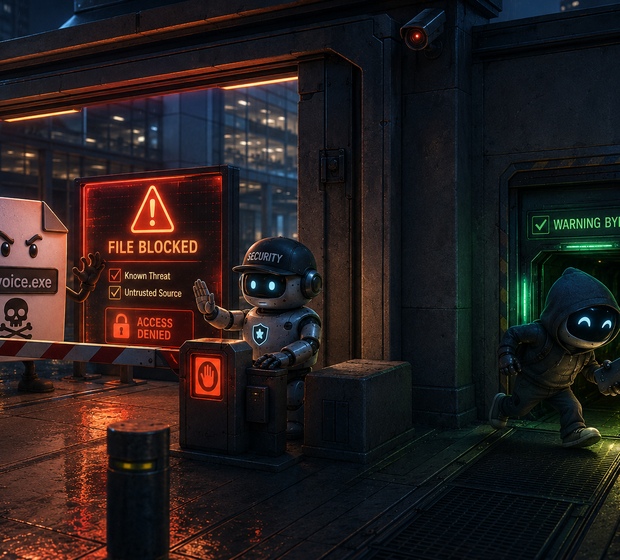
Attackers Are Learning to Bypass the Warning
Microsoft’s February security updates addressed vulnerabilities that were already being exploited in the wild. Several of the attacks targeted security protections themselves, including flaws in Windows Shell, MSHTML, and Microsoft Word that could bypass protections intended to stop malicious content before it runs.
Coeus Perspective: Security warnings are useful, but they cannot be the last line of defense. Attackers increasingly look for ways around the controls intended to warn users, making layered security and timely patching more important than relying on someone to recognize every dangerous file or link.
Coeus Insight: Build security assuming some malicious content will eventually get past the first warning. Patch management, endpoint protection, identity controls, and restricted privileges provide layers that continue protecting the business when one control fails.
Source: Microsoft Security Response Center, February 2026 Security Update, February 10, 2026.
The Proven Path
Strategies for Today
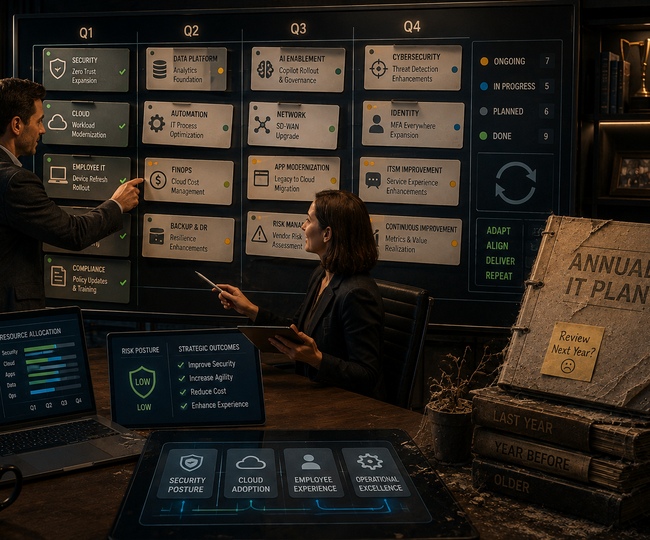
Stop Planning IT Once a Year
Technology planning works better when it moves at the speed of the business. McKinsey’s Global Tech Agenda 2026 found that nearly half of top-performing organizations continuously develop business and technology strategy together, compared with 29% of organizations overall. Nearly two-thirds of top performers also reported that their technology leaders are highly involved in shaping enterprise strategy.
Coeus Perspective: Technology decisions affect hiring, productivity, security, customer experience, capital spending, and growth. Planning IT only during the annual budget process leaves technology reacting to the business rather than supporting where it is going.
Coeus Insight: Review technology priorities alongside business priorities throughout the year. A quarterly roadmap helps keep spending, risk, lifecycle decisions, and upcoming projects aligned with what the company is actually trying to accomplish.
Source: McKinsey & Company, Global Tech Agenda 2026, February 9, 2026.
The Horizon
Preparing for Tomorrow
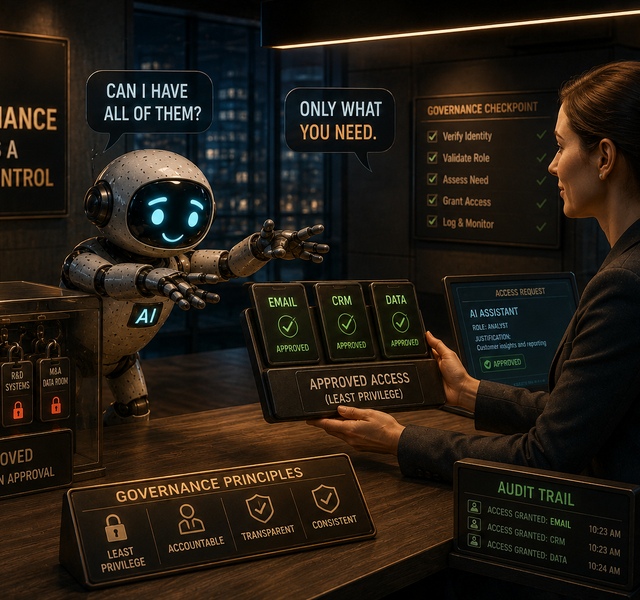
AI Governance Becomes a Business Control
As AI moves deeper into business operations, organizations are beginning to formalize how it should be governed. On February 18, the U.S. Treasury announced a public-private initiative developing practical resources for secure AI adoption in financial services, addressing governance, data practices, transparency, fraud, and digital identity.
Coeus Perspective: Financial services may be one of the first industries formalizing these controls, but the questions apply much more broadly. Businesses adopting AI need to know which systems are being used, what company information they can access, who is accountable for their decisions, and how their activity can be reviewed. As AI moves from something employees use to something businesses operate, governance will increasingly define what authority AI systems themselves are allowed to have.
Coeus Insight: Start treating AI governance as part of normal business risk management. An inventory of approved AI tools, clear data-use rules, defined ownership, and appropriate human oversight will become increasingly important as AI gains access to more business processes.
The Agora
Meet Coeus
Revolutionizing Healthcare AI
Live Online Webinar | Friday, March 27 | 10:00-11:00 AM PDT
Healthcare organizations have already spent years moving records, workflows, and operations into digital systems. The next question is how AI can build on that foundation. In March, Coeus Consulting will host Revolutionizing Healthcare AI - Beyond the Initial Digital Transformation, a live online discussion focused on what comes next as healthcare organizations begin applying AI to their technology environments.
About the Author
Linus Malefors
Managing Director, Coeus Consulting
Linus Malefors is an accredited technology consultant with over 30 years of experience serving Phoenix small and mid-sized businesses. He has supported more than 1,000 organizations throughout his career, and his leadership at Coeus Consulting has earned him two MSP Titans of the Industry finalist honors and a place among the 2026 AZ Champions of Change finalists. His technology expertise spans cybersecurity, cloud, AI, infrastructure, and regulatory compliance.