

PHP2Shell: Critical Flaws in Software Powering 70% of Websites Cause Worldwide Disruption
Why serious PHP vulnerabilities forced websites offline around the world, and what businesses need to do.
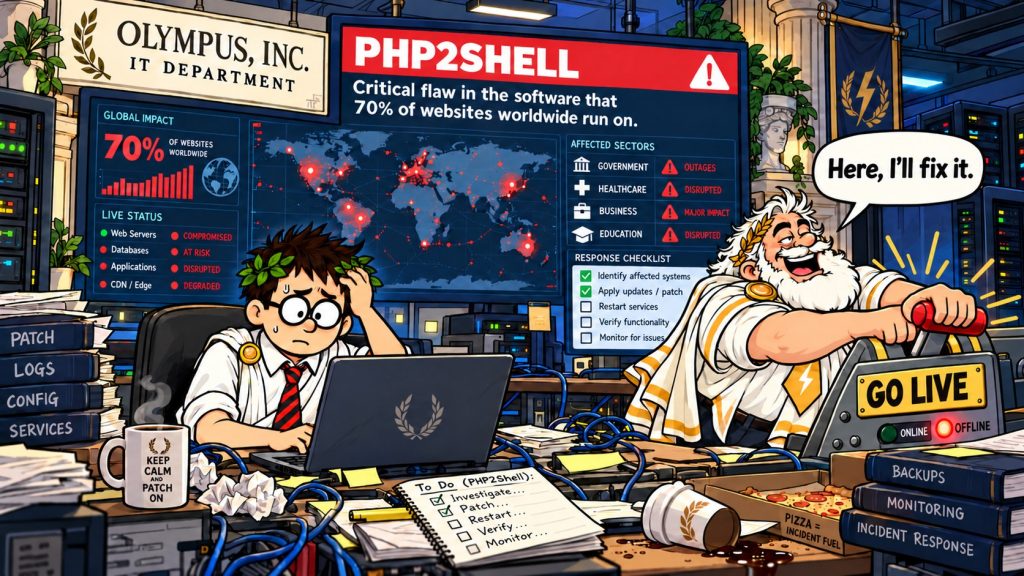
On October 21, 2026, two critical security vulnerabilities in PHP triggered emergency shutdowns of websites and online services around the world. PHP is the programming language behind approximately 70% of websites worldwide, including popular platforms such as WordPress, Drupal, and Joomla. The newly discovered flaws, collectively known as PHP2Shell, could allow attackers to compromise vulnerable web servers without needing a password.
Government agencies and businesses temporarily took websites offline while installing emergency updates. Cloudflare also reported observing active exploitation attempts, making this more than a theoretical risk. If your business uses a website or customer portal powered by PHP, confirm that the hosting provider or IT team has addressed the vulnerabilities. Keeping WordPress and its plugins updated alone is not enough.
Is Your Business Affected, and What Should You Do?
Using PHP does not automatically make a website vulnerable. Exposure depends on the installed software, security fixes, and server configuration. For many businesses, PHP maintenance is handled by a web hosting provider, web developer, or IT department rather than the business owner.
- Check with your website provider. Ask whether your sites or online applications use PHP, whether their configurations are affected, and whether PHP2Shell security updates have been installed.
- Confirm the actual fix. PHP released corrected versions 8.2.35, 8.3.36, 8.4.27, and 8.5.12. Some operating system vendors also provide backported fixes, so a version number alone may not tell the whole story.
- Review older applications. Custom customer portals, websites, and unsupported PHP environments may be especially difficult to patch and should not be overlooked.
If an affected internet-facing application cannot be patched promptly, restricting public access may be appropriate until it is secured. A web application firewall (WAF) can offer temporary protection, but it should not replace updating the underlying PHP installation.
Why Was PHP2Shell So Dangerous?
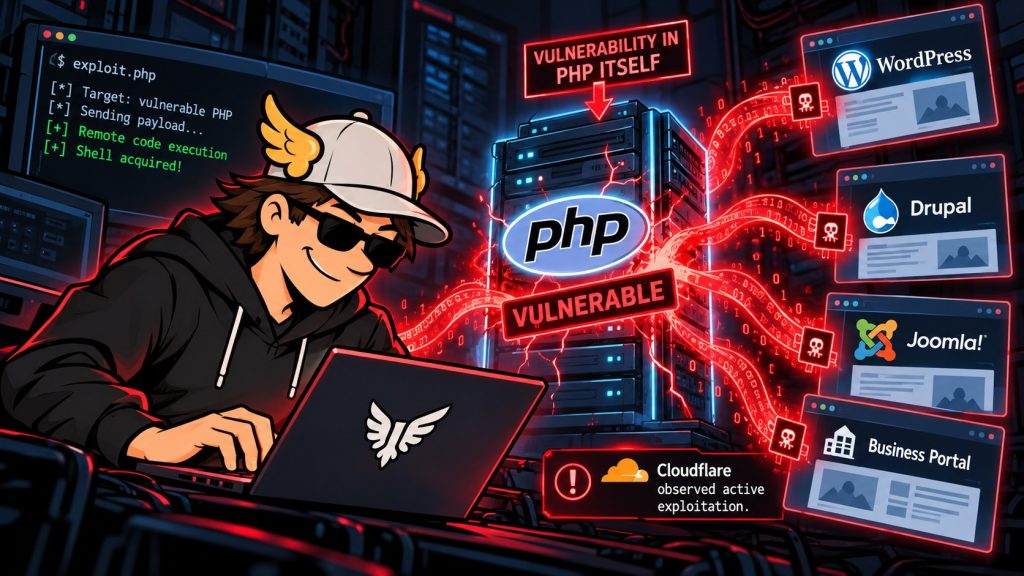
PHP2Shell refers to CVE-2026-109618 and CVE-2026-109619, both rated critical at 9.2 under CVSS 4.0. The flaws involve how PHP manages computer memory. Under certain conditions, maliciously crafted web requests can lead to unauthorized code execution or disclosure of sensitive information, depending on the vulnerability and environment.
That could give attackers access to website data, credentials, or software running on a vulnerable server. The important distinction is that the problem lies in PHP itself, underneath the website. A well-maintained WordPress installation may still be exposed if the underlying PHP runtime has not been fixed.
Why Did So Many Websites Go Offline?
As the flaws became public, security agencies and providers moved quickly to protect exposed systems. Government websites and other online services in Europe were temporarily disabled as a precaution, while hosting companies deployed fixes and restarted affected services. Many of these outages reflected a deliberate security decision, not a confirmed successful breach.
The fixes were scheduled for release on October 21, but the vulnerability identifiers leaked online the day before, giving attackers a head start. That left a compressed window for teams to identify affected systems, update PHP, test applications, and restore services. The business choice was often between accepting temporary downtime and risking a far more damaging compromise.
AI Helped Reveal a Long-Hidden Weakness
Researchers at Wiz used advanced AI models in the discovery and analysis of the vulnerabilities, helping develop and validate exploits for weaknesses that had existed for years. The same technologies that help defenders locate security problems may also shorten the time attackers need to find and exploit them.
That is why emergency patching is becoming more important. As we discussed in our earlier article, “AI Is Shrinking the Time Businesses Have to Patch,” knowing what technology your business relies on and who is responsible for updating it can make the difference between a manageable interruption and a major incident.
Frequently Asked Questions
Does PHP2Shell affect every WordPress website?
No. WordPress uses PHP, but actual exposure depends on the PHP installation, applicable fixes, and configuration. Updating plugins alone does not address PHP2Shell.
Were all the websites that went offline hacked?
No. Many were deliberately taken offline while security updates were deployed. An outage alone does not establish that a breach occurred.
How do I know whether my website is protected?
Ask your hosting provider or IT administrator to confirm the applicable PHP2Shell fixes were installed, services restarted, and key website functions tested.
Have a technology problem or question you’d like to discuss?
Coeus Consulting helps small and mid-sized businesses understand the technology they depend on, assess cybersecurity exposure, and make practical decisions that balance security with uptime.
Book time with Coeus Consulting
About Coeus Consulting
Coeus Consulting is a Phoenix-based managed IT services provider and MSSP serving small and mid-sized businesses across managed IT, cybersecurity, cloud, and compliance. We help organizations make practical technology decisions that improve resilience without losing sight of business reality.
About the Author
Linus Malefors
Managing Director, Coeus Consulting
Linus Malefors is an accredited technology consultant with over 30 years of experience serving Phoenix small and mid-sized businesses. He has supported more than 1,000 organizations throughout his career, and his leadership at Coeus Consulting has earned him two MSP Titans of the Industry finalist honors and a place among the 2026 AZ Champions of Change finalists. His technology expertise spans cybersecurity, cloud, AI, infrastructure, and regulatory compliance.
Sources referenced in this article: