

The Holiday Digital Security Survival Guide
The most expensive purchase you make this year could be the one that costs you your digital identity or compromises your company’s data.
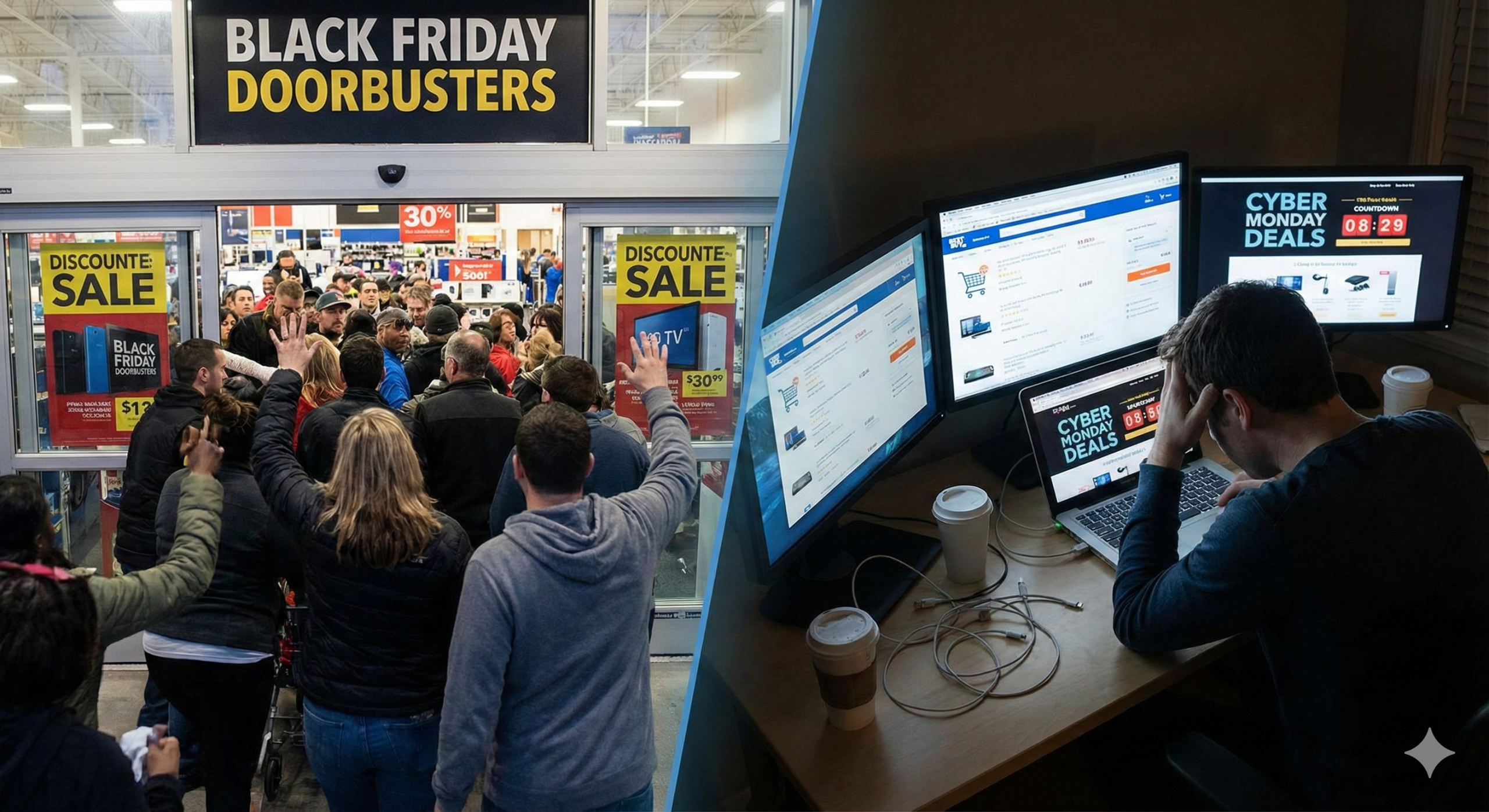
Protecting Your Wallet and Your Workplace This Cyber Week
The Thanksgiving leftovers are barely packed away before the frenzy begins. We are entering the high holy days of retail: the chaotic doorbusters of Black Friday and the digital scramble of Cyber Monday.
Once upon a time, these were distinct events. Today, however, they have merged into a single, week-long blur of digital commerce. When it comes to cybersecurity, Black Friday and Cyber Monday are truly “two peas in the same pod.”
They share identical DNA: urgency, massive transaction volumes, and let-down guards.
This convergence creates a gold rush for cybercriminals. Hackers do not distinguish between a consumer looking for a discounted TV and a corporate user sneakily buying holiday gifts on their company laptop during a lunch break. Both are prime targets, and the risks for one often bleed into the other.
The modern holiday shopping season is a minefield. We are no longer just facing “Nigerian Prince” scams; we are facing AI-powered cyberattacks. These advanced tools enable criminals to craft perfect, personalized phishing emails at scale, making scams harder to spot than ever before.
To navigate this sales season safely, both everyday consumers and those using corporate assets need to heighten their vigilance.
For Consumers: Locking Down Your Digital Identity
The primary goals for attackers targeting consumers are credential harvesting (stealing your usernames and passwords) and direct financial theft. When you are rushing to beat the checkout timer, it’s easy to miss red flags.
Here are three critical recommendations to protect your financial information and identity:
- Fortify Your Accounts (MFA is Non-Negotiable): Never use the same password for your banking, email, and retail sites. If one retailer gets breached, they all fall. More importantly, enable Multi-Factor Authentication (MFA) wherever possible. Even if a hacker steals your password in a phishing scam, MFA provides a crucial second barrier they usually cannot cross.
- Master the “Hover and Inspect”: Phishing emails promising “exclusive deals” or fake “order cancellations” will skyrocket. Before clicking any link in an email or text, hover your mouse over it to see the actual destination URL. If an email claims to be from “BestBuy” but the link directs to “bestbuy-deals-online.xyz,” delete it immediately.
- Isolate Your Shopping Finance: Consider using a single credit card for all online holiday shopping, preferably one with a low limit or virtual card numbers. This makes monitoring transactions easier and limits the damage if the card number is compromised. Never use debit cards online; credit cards offer far superior fraud protection.
For Corporate Users: The “Shadow IT” Risk
The lines between work and home life are blurred, especially in remote or hybrid environments. Employees often use corporate devices for personal holiday shopping. This practice creates “Shadow IT” risks that terrify CISOs. A single wrong click on a work laptop can introduce malware that pivots from the device directly into the company network.
Here are three examples of how corporate users must protect themselves (and their employers) when shopping online during the workday:
- Respect the Device Boundary: The golden rule is simple: keep personal shopping off corporate devices. Use your personal phone on cellular data instead of your work laptop on the company network. If you must use a work device, ensure you are strictly adhering to the company’s acceptable use policies.
- Always Engage the Corporate VPN: If you are traveling for the holidays and connect your work laptop to hotel or airport Wi-Fi to check emails (and perhaps sneak a quick purchase), you must use the company’s Virtual Private Network (VPN). Public Wi-Fi is notoriously insecure; a VPN encrypts your traffic, shielding both your credit card number and corporate login tokens from prying eyes.
- Beware the “B2B” Holiday Phish: Attackers know corporate users are distracted by deals. Be hyper-skeptical of emails disguised as business-related holiday urgency, such as “Urgent: Q4 Vendor Invoice” or “Company Holiday Gift Portal Login.” These are often lures designed to steal corporate credentials during the holiday chaos.
The Coeus Advantage: Defending Against AI Threats
The threats we face today are smarter and faster than they were a year ago. At Coeus Consulting, a Phoenix-based MSSP, we understand that standard defenses aren’t always enough against the new wave of AI-powered cyberattacks.
For our SMB clients, the risk isn’t just a stolen credit card—it’s the survival of the business. We specialize in helping small and mid-sized companies harden their defenses, protect their employees, and secure their digital assets against these sophisticated, automated threats. Whether it’s training your team to spot AI-generated phishing emails or deploying advanced endpoint protection, we are your partner in the fight.
The Best Deal is Safety
Black Friday and Cyber Monday offer incredible deals, but don’t let the fear of missing out cloud your judgment. Slow down, verify before you click, and if you are concerned about your business’s security posture this season, reach out to Coeus Consulting. Let’s ensure your holidays are happy, safe, and secure.
BlackFridayCyberSecurity #CyberMondayScams #HolidayShoppingSafety #StopThePhish #AIPhishing #CyberSecurityAwareness #SmallBusinessProtection #SMBTech #CorporateDataSecurity #ShadowIT #WorkFromHomeSecurity #IdentityTheftProtection #RansomwarePrevention #PhoenixBusiness #PhoenixCyberSecurity #CoeusConsulting #MSSP #ArizonaBusiness #CyberSecurityTips #SafeOnlineShopping #ZeroTrust #EmailSecurity #EmployeeTraining #DataPrivacy #CyberDefense #TechSafety #SecureTheSeason #HolidaySurvivalGuide #BusinessContinuity #FraudPrevention