

Protecting Arizona Non-Profits: Cybersecurity & Prop 211
Facing unique security challenges? Our archive offers tailored advice for non-profits on data protection, compliance, and IT strategy. Read our expert insights now.
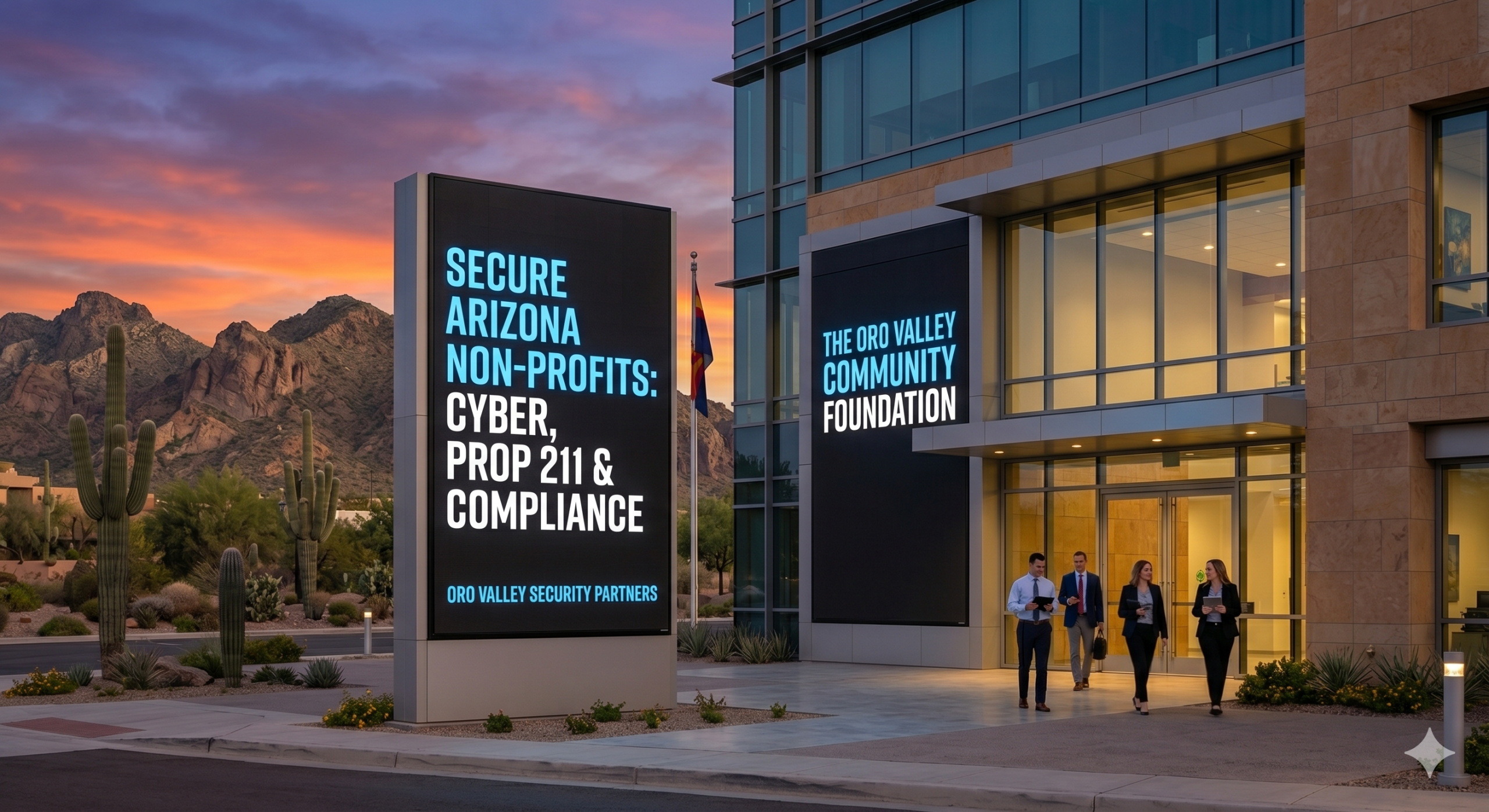
Here are the top 5 cybersecurity and compliance challenges for charitable Arizona organizations.
1. The “Donor Data” Dilemma (Prop 211 vs. Privacy)
Arizona’s “Voters’ Right to Know Act” (Prop 211) has created a complex data environment for organizations involved in advocacy.
- The Challenge: You may be legally required to disclose top donors for political spending publicly, but you are simultaneously needed to protect the private data (addresses, credit cards) of those same donors from hackers.
- Arizona Context: High-net-worth donors in Scottsdale and Paradise Valley are increasingly targeted by “Whaling” attacks (phishing targeted at wealthy individuals). If a breach at your non-profit exposes their private emails, you don’t just lose data; you lose the trust of your biggest benefactors.
- The Risk: Navigating the line between “Public Disclosure” and “Data Breach” requires precise data segmentation. A simple spreadsheet error could expose anonymous donors, leading to lawsuits and a collapse in future funding.
2. CEO Fraud & “Urgency” Scams
Non-profits are statistically the highest-risk sector for “Social Engineering” because their culture is built on helpfulness and urgency.
- The Challenge: Attackers spoof the email of the Executive Director (ED) or Board Member, sending a message to the finance manager: “I’m at a fundraiser and need a check wired immediately to secure the venue.”
- Arizona Context: During the busy “Gala Season” (Spring and Fall in Phoenix/Tucson), staff are overwhelmed and guards are down. Attackers time their campaigns to coincide with major local events, such as the Phoenix Open or charity golf tournaments.
- The Impact: We have seen Arizona charities lose $50,000+ in a single afternoon because a well-meaning volunteer paid a fake vendor invoice without verifying it.
3. The “Accidental” HIPAA Violation
Many Arizona social service agencies don’t realize they are, in fact, healthcare providers under the law.
- The Challenge: If your non-profit provides counseling, addiction recovery, or housing support (like many in the ‘Valley of the Sun’), you are likely to collect medical info or SSNs.
- The Trap: Using free tools like Google Sheets or standard Gmail to track “client intake” often violates HIPAA if you haven’t signed a BAA (Business Associate Agreement).
- Compliance Impact: A breach of this data triggers federal OCR investigations. For a non-profit operating on thin margins, the resulting fines (often starting at $10,000) can be a “lights out” event.
4. Third-Party Platform Risks (The “Blackbaud” Effect)
Arizona non-profits rarely host their own servers; they rely on massive donation platforms (Classy, Bloomerang, DonorPerfect).
- The Challenge: You trust these vendors with your entire database. But when they get hacked (like the massive Blackbaud breach), you are still responsible for notifying your Arizona donors.
- Arizona Law: Under A.R.S. § 18-552, if your vendor leaks data, the 45-day clock to notify the Arizona Attorney General starts ticking for you, not just the vendor.
- Action Required: You must have an “Incident Response Plan” that dictates exactly how you will communicate with your donors if your CRM goes down, ensuring you control the narrative, not the hackers.
5. Missing Out on “Free” Security Money (NSGP Grants)
One of the biggest tragedies in the Arizona non-profit sector is leaving federal security money on the table.
- The Opportunity: The Arizona Nonprofit Security Grant Program (NSGP) provides funds specifically to harden “soft targets” against attack. This includes funding for cybersecurity upgrades, not just cameras and fences.
- The Hurdle: To win these grants, you must submit a formal “Vulnerability Assessment.” Most small non-profits don’t know how to write one, so they don’t apply.
- The Trap: Manufacturers often waste the first 3 weeks trying to “fix” the machines rather than investigating what data left the building.
- Our Role: We help Arizona non-profits perform the required Risk Assessments to apply for NSGP funding, effectively helping you get the government to pay for your cybersecurity upgrades.
Protect Your Donors. Protect Your Mission.
In the age of Prop 211 and “Whaling” attacks, a single data breach can shatter the trust of your biggest benefactors. Don’t let a spreadsheet error or a spoofed email cost you your reputation.
Secure Your Donor Data Today. We help Arizona non-profits balance transparency with privacy, securing donor lists and stopping “CEO Fraud” before money leaves the bank.